
How Formula 1 Technology Influences Everyday Cars
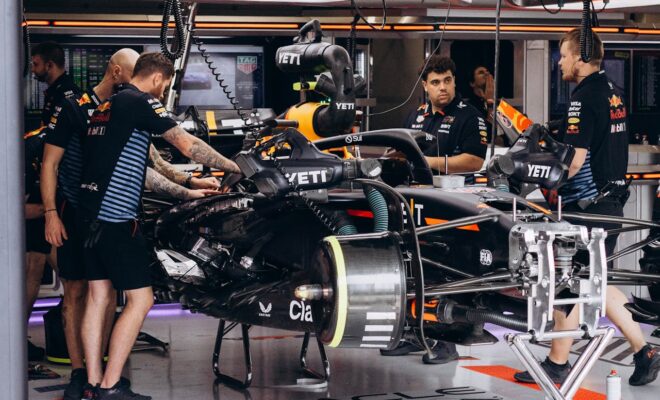
“This article explores how Formula 1 serves as a high-speed laboratory for modern automobiles. It details how elite Formula 1 technology including hybrid engines, advanced aerodynamics, and carbon fiber safety is adapted to enhance the efficiency, performance and sustainability of everyday road cars.”
The average commuter, stuck in a gridlock of steel and glass, rarely feels a connection to the high octane world of Grand Prix racing. At first glance, a Formula 1 car a low slung, carbon fiber weapon designed to pull 5G through a corner has little in common with a family SUV. Yet, under the hood of your daily driver lies a hidden heritage. The automobiles we use for grocery runs and school commutes are effectively detuned versions of the world’s most advanced racing machines.
Formula 1 has always functioned as a high speed laboratory. It is a place where the world’s brightest engineers are given a blank check to solve physics problems in real time. As we move through 2026, the bridge between the circuit and the street is shortening. The quest for marginal gains on the track is directly responsible for the safety, efficiency and longevity of the cars we rely on today.
The Hybrid Revolution: Beyond the Battery
For decades, engine displacement determined automotive power. In 2014, Formula 1 switched to 1.6-liter V6 Turbo Hybrids, dispelling the fallacy. This transition prompted manufacturers to learn Thermal Efficiency, the science of turning fuel into motion rather than heat and noise. It is this relentless pursuit of efficiency that distinguishes the best car companies in the world from the rest of the industry.
The Energy Recovery System is a major F1 car innovation. When F1 drivers brake hard for a hairpin curve, they generate electricity. The Motor Generator Unit Kinetic recycles this kinetic energy into the battery. A modern hybrid or EV with one pedal driving is a direct successor of this race innovation. It changed the feasibility of modern cars by turning braking into a power-generating action.
In addition, high-end turbochargers now use the MGU H unit to gather exhaust heat. This system uses electricity to spool up the turbo, eliminating acceleration lag. A compact, fuel-efficient engine feels like a big V8, giving power on demand without environmental impact.
Aerodynamics: The Art of Invisible Efficiency
To an F1 engineer, air is like molasses a thick, stubborn fluid that must be managed. While racing teams use F1 aerodynamics to create downforce (the invisible force pinning the car to the asphalt), road car manufacturers utilize these principles to reduce drag.
Active Aero is becoming more popular in daily transportation. Modern automobiles include front grille shutters that close at highway speeds to improve ventilation. Straight from the F1 playbook. Manufacturers increase battery range and MPG by smoothing vehicle airflow. Sports vehicles use the Drag Reduction System (DRS) from TV to balance stability and speed by automatically adjusting wing angle.
Science: The Carbon Fiber Safety Net
Perhaps the most vital area of F1 engineering in road cars is structural safety. In the early 1980s, an F1 crash was often a catastrophic event. That changed with the introduction of the carbon fiber monocoque a rigid survival cell that remains intact even when the rest of the car disintegrates during an impact.
This safety cell philosophy is now baked into the skeleton of every modern car. While your vehicle might be constructed from high strength steel rather than pure carbon fiber, the crumple zones and rigid passenger cabins are designed using the same crash simulation software pioneered by F1 teams.
Furthermore, carbon fiber car parts are no longer reserved for the elite. Because F1 pushed for faster, more cost effective ways to manufacture this wonder things, we now see it used for roofs, chassis components and liftgates in various consumer vehicles. This reduces total weight, which makes cars safer to handle and far more efficient to operate.
The Digital Twin: Software That Predicts the Future
A modern F1 race is won as much on a laptop as it is on the asphalt. During a single weekend, a team will run billions of simulations to predict tire wear and fuel consumption. This mastery of data has filtered down into the onboard computers of our personal vehicles.
This is Formula 1 car technology in digital form when your automobile recommends a service or alerts you of a component failure. Predictive maintenance prevents failures. Race tracks were where computers learnt to regulate wheel spin faster than human drivers, perfecting electronic stability control (ESC) that prevents sliding on rainy highways.
Looking Toward the Future: Sustainable Fuels
The automotive world is currently at a crossroads between electricity and internal combustion. Formula 1 is charting a third path: 100% sustainable fuels. By 2026, the sport will run entirely on drop in synthetic fuels that capture carbon from the atmosphere during production.
This is a massive development for the average driver. While the world transitions to EVs, there are still over a billion combustion engines currently on the road. F1’s pursuit of these fuels could provide a way for us to keep existing vehicles operational without damaging the planet. It proves that the pinnacle of motorsport isn’t just about speed it’s about ensuring the future of global mobility.
Conclusion
Formula 1 is often viewed as a circus of excess, but it is actually the world’s most intense filter for engineering ideas. Only the most efficient, durable and clever technologies survive the pressure of a Grand Prix season.
The next time you enjoy the seamless power of a hybrid motor, the silence of a well sculpted aerodynamic body, or the peace of mind of a high safety rating, remember the track. You aren’t just driving a machine built in a factory; you are driving the result of decades of intense competition. The DNA of the winner’s circle is in every turn of your steering wheel.