How Industry Changed Humanity Forever
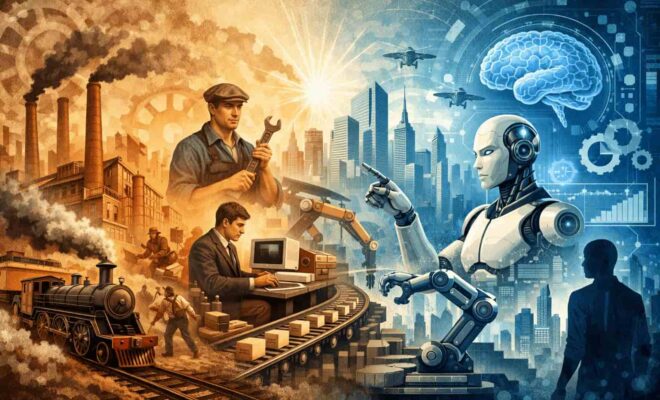
This article explores the profound impact of the Industrial Revolution on society, tracing its path from historical upheaval to today’s challenges with AI and automation, and emphasizing the need for proactive adaptation to shape a positive future of work.
Look at what’s around you and the phone in your palm the light above your head and even the clothes you wear are all the result of a human miracle that took hundreds of years to happen. It started with a Wonder of human curiosity and a strong desire to control the elements. This spark started the Industrial Revolution which changed more than simply how we work. It radically and permanently changed the entire fabric of our societies, our lives and our planet. We are all living in its constantly changing wake.
From Forge to Global Village
Before the 18th century life was largely local and agrarian. The shift to mechanized manufacturing changed everything. Steam power and factories centralized production. They pulled people from rural fields into burgeoning cities. This migration built the modern urban landscape we know today. Railways and steamships shrank continents. They created the first threads of a globalized economy. The industry has given us unprecedented speed, scale, and connectivity. It built our modern world, forging a path of material progress our ancestors could scarcely imagine.
The Industrial Revolution brought a huge change from rural living to a world of cities and machines. Steam power and industries brought production together bringing millions of people from rural areas to growing cities. This migration shaped the way cities look today. At the same time new technologies like railroads and steamships made continents smaller, starting to weave the first threads of a worldwide economy. This time changed the geography, connections and scale of people which led to the linked world we live in today. It was a major change to civilization taking us from little, isolated forges to the edge of a real global community.
The Double-Edged Sword of Progress
This transformation did not come without cost. The very engines of progress created profound social dislocation. Early factories demanded long hours in tough circumstances for low pay. Though depicted as technophobes, Luddites were accomplished craftsmen. Their livelihoods were threatened by machines that undervalued their craft. This was a harsh start to Workforce displacement. The machinery that promised liberation from toil also cast many into poverty. This is a stark reminder that progress’s benefits are never automatically shared by all.
The Modern Assembly Line: A New Wave of Automation
Today we stand at a similar precipice and the tools of change are now digital. The current conversation revolves around job automation driven by Artificial Intelligence AI robotics and sophisticated software. Unlike the mechanical muscles of the past this new revolution targets cognitive tasks. Algorithms now analyze legal documents. They manage investment portfolios and diagnose medical images. These were all tasks once the exclusive domain of highly educated professionals. This is not a distant future scenario. It is happening now in sectors from logistics to finance. It is reshaping the very nature of the work we do.
Today’s assembly line is digital, powered by AI and robotics that replicate cognitive tasks. This new wave of automation is transforming knowledge work itself. Algorithms now diagnose conditions, analyze legal documents and manage logistics with superhuman speed and accuracy. This shift is fundamentally different from past mechanical innovations; it is not just replacing muscle but also human judgment in white collar roles. The factory floor has migrated into the office requiring an urgent and concerted reaction to reskill the workforce for human machine partnership not replacement.
Navigating the Shift: From Displacement to Opportunity
It is very true and real that many are afraid of losing their jobs. Many jobs, especially those that are monotonous and easy to forecast, are changing or going away. We need to do everything we can to make sure that these jobs don’t become dead end jobs: the history of technological unemployment of the 21st century. History reminds us that technology can destroy certain vocations, but it can also generate whole new fields of work. It creates jobs that people couldn’t even imagine before. The most important thing we all need to do is not let the stream of innovation stop. We must manage the transition for people. We must invest in continuous education and robust reskilling programs. We need social safety nets that allow workers to adapt and thrive.
Charting the Future of Employment
So what does the future of work look like? It will probably be a combination of human inventiveness and mechanical efficiency. The jobs of the future will require abilities that only people have. These are some of the skills that are important: critical thinking, solving difficult problems, being creative and being able to understand and control your emotions. The idea of having one job for life is already vanishing. It is being replaced by a model of learning throughout life and changing careers several times. Everyone, including individuals, teachers and policymakers, has to take action to make this change happen. To do well in this new world we need to be flexible and have a mindset of always growing.
Conclusion
The effects of the Industrial Revolution’s impact on people will last forever. It gave us a lot of power and comfort, but it also gave us long-lasting problems with fairness and change. Our job is obvious as we deal with this new wave of upheaval. We need to use the same spirit of human creativity that got us started. We need to lead this strong force with compassion and foresight so that the future we create puts human dignity and opportunity for all ahead of UniWorld News technological progress.